Tattoo Healing Instructions — Good One Tattoo
A fresh tattoo is an open wound. The way you care for it in the first few days determines how it heals for life. Follow these instructions carefully and reach out to your artist if anything seems off.
1. First things first
Your artist will apply one of two types of coverings:
• A protective film (Saniderm or similar)
• A traditional bandage (Dry-Lok pad or wrap)
Follow the instructions below depending on which one you received.
Option A — Saniderm or Similar Film Bandage
Keep the bandage on for 24–48 hours.
Your artist will tell you when to remove it. During this time, you may notice fluid or ink build up under the bandage — that’s normal.
To remove:
• Do it slowly under warm running water.
• Peel gently in the direction of hair growth.
• Never rip it straight off.
Once removed:
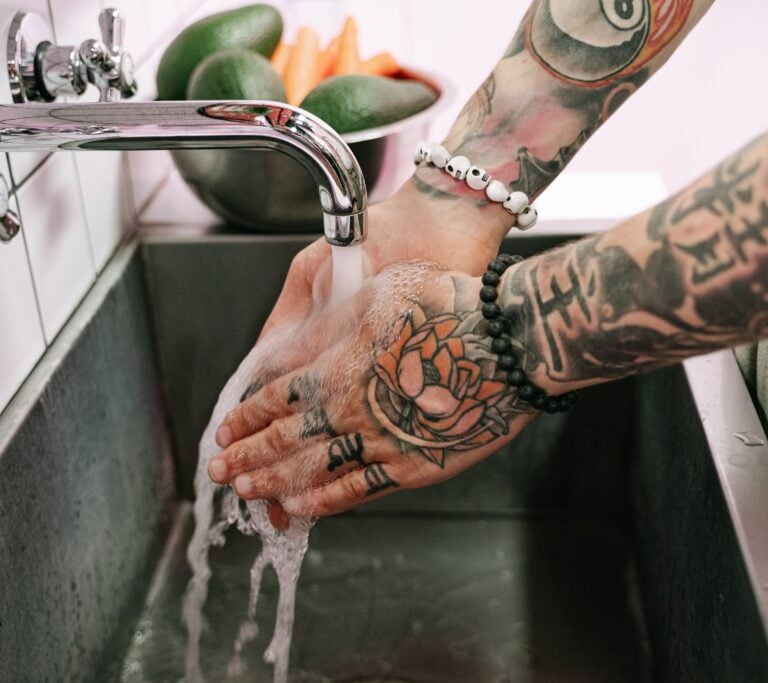
1. Wash your tattoo with warm water and a mild, fragrance-free soap (like Dial Gold or Dr. Bronner’s Unscented).
2. Pat dry with a clean paper towel or let it air dry completely.
3. Apply a thin layer of fragrance-free lotion (Lubriderm, Aquaphor, or Hustle Butter). Don’t over-apply — the tattoo should feel hydrated, not greasy.
Avoid:
• Long hot showers
• Direct sun or tanning
• Soaking, swimming, or heavy sweating
• Tight or dirty clothing
If the film peels off early or fluid leaks, gently remove it, clean the tattoo, and follow the traditional instructions below.
Option B — Traditional Bandage (Dry-Lok or Wrap)
Leave the bandage on for 2–4 hours.
When removing, wash hands first, then clean the tattoo gently with warm water and mild, fragrance-free soap. Pat dry with a clean paper towel.
For the first 2–3 days:
Apply a very thin layer of Aquaphor, A&D ointment, or your artist’s recommended product 2–3 times daily. Too much ointment can trap heat and bacteria.
After the first few days, switch to a fragrance-free lotion. Use just enough to keep it from drying or cracking.
Avoid:
• Re-bandaging unless told to
• Touching it with dirty hands
• Soaking, swimming, or sweating heavily
• Pet contact or letting animals near your healing tattoo
• Tight clothing and direct sunlight
3. Clean, not greasy
Less is more. Over-moisturizing is one of the most common reasons tattoos get irritated or cloudy during healing. Keep it clean, dry when needed, and only lightly moisturized.
4. What’s normal vs. what’s not
✅ Normal: mild redness, slight swelling, light flaking, light itching.
⚠️ Not normal:
• Hot, painful, or oozing areas
• Thick or yellow scabs
• Expanding redness or streaks
If you notice these symptoms, contact your artist or a healthcare provider — early infections can usually be stopped easily if handled right away.
5. Protect it from the world
Your new tattoo will try to close up in the first few days, but remains vulnerable for a couple of weeks.
• Keep it out of the sun.
• Avoid tight or dirty clothes.
• Sleep on clean sheets.
• Keep pets away — fur, dander, and saliva are common culprits for infection.
• Avoid showing off fresh tattoos in public spaces, bars, or gyms until healed.
6. Healing timeline
• Days 1–3: Slight oozing, mild redness.
• Days 4–10: Flaking, dryness, light peeling.
• Days 11–30: Skin looks healed, but deeper layers are still repairing.
Even if it looks good on the surface, true healing continues for several weeks.
7. Raised lines, scabs, and scars
Sometimes tattoos can heal raised or textured if the skin was overworked or irritated. This doesn’t always mean you’re prone to keloids — it can also happen from trauma, pressure, or infection.
Don’t pick at thick scabs or re-bandage constantly; let your body handle the process naturally.
If a tattoo ever heals raised, give it at least 6–12 months before trying to rework or cover it.
8. Communication is key
If something feels off, reach out. Healing problems can happen even in the best shops — what matters is catching them early.
At Good One Tattoo, we stand behind our work. If you’ve followed proper aftercare and need a touch-up once healed, we’ll make sure you’re taken care of.